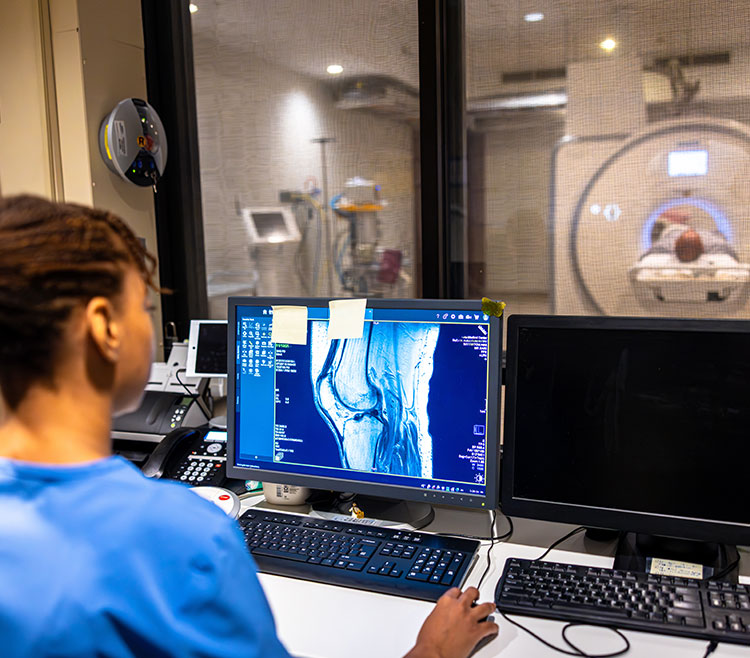
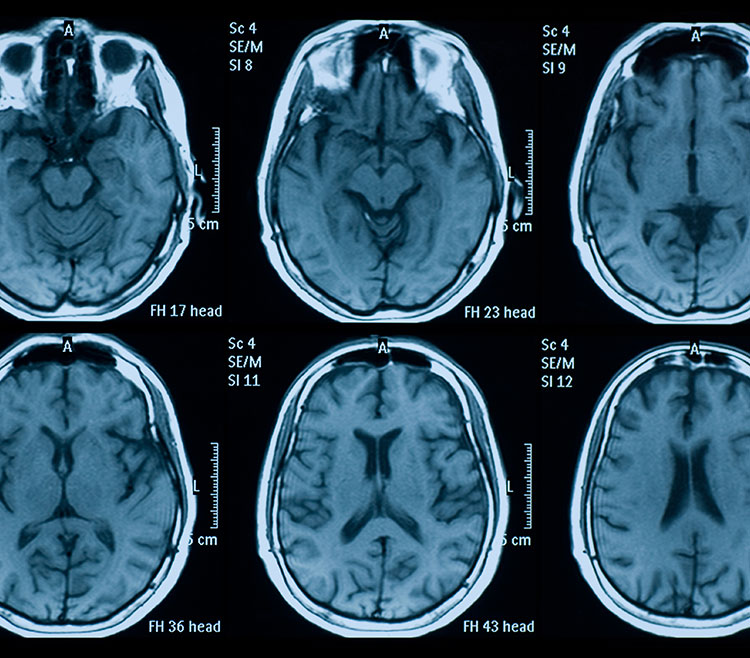
Magnetic resonance imaging (MRI) technologists use advanced imaging technology to produce images that help physicians diagnose injuries, diseases, and other medical conditions. ACC’s Associate of Occupational Science in Magnetic Resonance Imaging program is designed to provide the foundational knowledge and hands-on experience needed to begin a career in this specialized healthcare field.
The 20-month MRI program combines classroom learning, hands-on lab training, and supervised clinical experience. The program is offered at ACC’s Orange County campus and is delivered in a blended format — combining online coursework with in-person training.
Throughout the program, students learn MRI procedures, imaging physics, patient care, anatomy, safety protocols, and image acquisition techniques while developing the critical thinking and communication skills needed in healthcare environments.
Graduates earn an Associate of Occupational Science in Magnetic Resonance Imaging and are eligible to sit for the American Registry of Radiologic Technologists (ARRT) certification exam in MRI.
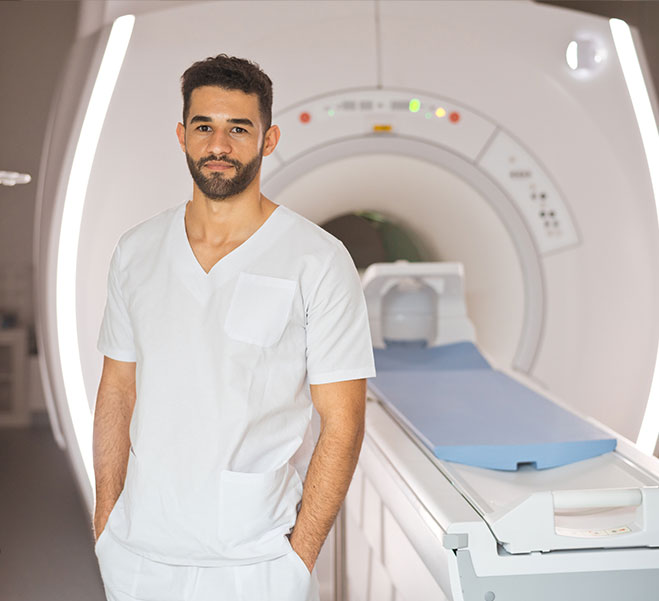
Is the Magnetic Resonance Imaging Technologist Training Program Right for you?
Learn imaging parameters, scanning techniques, and image acquisition procedures.
Learn MRI procedures and protocols used to capture detailed images of anatomy and pathology.
Develop communication, patient preparation, and safety skills used in MRI environments.
Learn more about what's in store for you in the Magnetic Resonance Imaging Technologist associate of occupational science degree program. For more on magnetic resonance imaging technologist courses, visit the college catalog.
Module Number |
Title |
Theory Hours |
Skill Lab Hours |
Clinical Hours |
Total Hours |
Quarter Credits |
|---|---|---|---|---|---|---|
| + ANAT105 | Introduction to Anatomy and Physiology † | 60 | 0 | 0 | 60 | 6.0 |
The purpose of this course is to understand the organization and general plan of the body and the importance of how the human body functions. This includes an introduction to the human body, chemical aspects of the life, cells, tissues, membranes, and the integumentary, skeletal, muscular, nervous, endocrine, cardiovascular, lymphatic, respiratory, digestive, urinary, and reproductive systems. | ||||||
| + MATH100 | College Mathematics I † | 40 | 0 | 0 | 40 | 4.0 |
This course will cover mathematical logic, Boolean algebra, set theory, number abstractions, operations and their properties, monomials, polynomials, equations and inequalities. | ||||||
| + MR100 | Introduction to MRI | 20 | 0 | 0 | 20 | 2.0 |
This introductory course outlines the role of a Magnetic Resonance Imaging (MRI) technologist, the history of MRI, hospital and imaging facility operations and professional organizations/accreditation. The students will be introduced to healthcare practices, profession information and the policies for the program. | ||||||
Totals |
120 |
0 |
0 |
120 |
12.0 |
|
Module Number |
Title |
Theory Hours |
Skill Lab Hours |
Clinical Hours |
Total Hours |
Quarter Credits |
|---|---|---|---|---|---|---|
| + MR200 | MRI Physics | 40 | 0 | 0 | 40 | 4.0 |
This course provides important concepts of how magnetic resonance images are produced. MRI history, magnetism, and electricity are also covered. | ||||||
| + ENGL100 | Written Communications I † | 40 | 0 | 0 | 40 | 4.0 |
This course provides instruction in the process of effective written communication for a variety of formats. It initially focuses on four basic areas of effective writing: unity, specifics, coherence, and grammar. The course will utilize reading, discussion and personal insight to increase students capacity to write simple paragraphs, formal essays, reports and research projects. Students will be equipped with techniques that facilitate creative, academic, and professional written communication. Additionally, students will be given library activities to enhance research skills. | ||||||
| + MR205 | Cross Sectional Anatomy I | 40 | 0 | 0 | 40 | 4.0 |
This course introduces the concepts of sectional imaging. Emphasis is placed on visualizing human anatomy in the transverse, sagittal, and coronal planes. The head, brain, facial, and neck regions are also explored. | ||||||
| + MR210 | MRI Procedures I | 10 | 20 | 0 | 30 | 2.0 |
This course provides and introduction to the procedures and protocols of MRI scanning. | ||||||
Totals |
130 |
20 |
0 |
150 |
14.0 |
|
Module Number |
Title |
Theory Hours |
Skill Lab Hours |
Clinical Hours |
Total Hours |
Quarter Credits |
|---|---|---|---|---|---|---|
| + MR300 | MRI Image Formation & Acquisition | 30 | 0 | 0 | 30 | 3.0 |
This course provides a comprehensive overview of the principles and techniques behind MR imaging with focus on image formation and data acquisition. Students learn radiofrequency (RF) pulses and relaxation mechanisms for MR imaging. | ||||||
| + MR305 | Cross-Sectional Anatomy II | 40 | 0 | 0 | 40 | 4.0 |
This course continues the cross-sectional content with an exploration of anatomy in the thorax, abdomen, and pelvis. Emphasis will be placed on understanding the spatial relationships of organs, vasculature, musculature, and skeletal landmarks. | ||||||
| + MR310 | MRI Procedures II | 10 | 20 | 0 | 30 | 2.0 |
This advanced course builds on the foundational concepts of MRI Procedure I. The key components include learning additional procedures and protocols for MR Imaging. | ||||||
| + MR315 | Patient Care ‡ | 30 | 20 | 0 | 50 | 4.0 |
This course will introduce students to the principles of patient care within the MRI setting. The topics included are patient preparation, effective communication, MRI safety, and patient rights. | ||||||
Totals |
110 |
40 |
0 |
150 |
13.0 |
|
Module Number |
Title |
Theory Hours |
Skill Lab Hours |
Clinical Hours |
Total Hours |
Quarter Credits |
|---|---|---|---|---|---|---|
| + MR400 | MRI Applications & Safety | 40 | 0 | 0 | 40 | 4.0 |
This course provides an overview of safety protocols for the MRI environment. The practical applications of MRI imaging is explored. | ||||||
| + MR405 | Cross-Sectional Anatomy III | 40 | 0 | 0 | 40 | 4.0 |
This course concludes the sectional anatomy content with an exploration of the anatomy of the spine and the upper and lower extremities. Emphasis is placed on the spatial relationships of organs, vasculature, musculature, and bony landmarks. | ||||||
| + MR410 | MRI Procedures III | 10 | 20 | 0 | 30 | 2.0 |
This course completes the procedures content for MRI imaging. More key components of MRI scanning techniques are covered and explained. | ||||||
| + MR415 | Medical Law & Ethics † | 20 | 0 | 0 | 20 | 2.0 |
This course covers legal, ethical, and professional concepts in healthcare. Topics examined include patient rights, informed consent, confidentiality, and legal implications of medical imaging procedures. | ||||||
Totals |
110 |
20 |
0 |
130 |
12.0 |
|
Module Number |
Title |
Theory Hours |
Skill Lab Hours |
Clinical Hours |
Total Hours |
Quarter Credits |
|---|---|---|---|---|---|---|
| + MR500C | Clinical Skills I | 0 | 0 | 240 | 240 | 8.0 |
This MRI clinical course provides hands-on experience alongside didactic instruction. Students will learn to manipulate MRI equipment, select imaging parameters, and protocols based on exam and patient conditions. | ||||||
| + MR500 | AI In Imaging † | 10 | 0 | 0 | 10 | 1.0 |
This course will examine AI applications across imaging sciences. The key topics addressed are disease classification, 3D visualization, organ/tissue segmentation, and AI usage from acquisition to annotation. | ||||||
| + MR515 | MRI Pharmacology & Administration | 20 | 20 | 0 | 40 | 3.0 |
This course provides a comprehensive overview of the knowledge and practice of administering diagnostic contrast agents during MRI procedures. | ||||||
Totals |
30 |
20 |
240 |
290 |
12.0 |
|
Module Number |
Title |
Theory Hours |
Skill Lab Hours |
Clinical Hours |
Total Hours |
Quarter Credits |
|---|---|---|---|---|---|---|
| + MR600C | Clinical Skills II | 0 | 0 | 240 | 240 | 8.0 |
Clinical Skills II builds upon the introductory skills to help student’s refi ne communication, scanning skills, and clinical reasoning. | ||||||
| + PSYC100 | Introduction to Psychology † | 40 | 0 | 0 | 40 | 4.0 |
This course provides basic psychological concepts such as the nervous system, memory, intelligence, and development as well as Freudian, humanistic, social, cognitive, and trait theories. | ||||||
| + MR615 | MRI Pathology | 20 | 0 | 0 | 20 | 2.0 |
This course will familiarize students with pathological conditions seen on MRI scans. Concepts include identifying, differentiating, and understanding common pathologies. | ||||||
Totals |
60 |
0 |
240 |
300 |
14.0 |
|
Module Number |
Title |
Theory Hours |
Skill Lab Hours |
Clinical Hours |
Total Hours |
Quarter Credits |
|---|---|---|---|---|---|---|
| + MR700C | Clinical Skills III | 0 | 0 | 240 | 240 | 8.0 |
This course continues to build on the previous clinical courses. Learners will advance their competencies by performing more complex procedures, refining patient care, and sharpening communication skills. | ||||||
| + MR715 | Registry Review I | 40 | 0 | 0 | 40 | 4.0 |
This is a structured course designed to prepare students for the American Registry of Radiologic Technologists (ARRT) MRI certification through content review and practice exams. | ||||||
Totals |
40 |
0 |
240 |
280 |
12.0 |
|
Module Number |
Title |
Theory Hours |
Skill Lab Hours |
Clinical Hours |
Total Hours |
Quarter Credits |
|---|---|---|---|---|---|---|
| + MR800C | Clinical Skills IV | 0 | 0 | 240 | 240 | 8.0 |
This course provides students with the culminating clinical experience. At a clinical setting, students will perform a wide range of MRI procedures independently. The focus is to complete all competencies required by the ARRT. | ||||||
| + MR815 | Registry Review II | 40 | 0 | 0 | 40 | 4.0 |
This culminating Registry Review course is designed to continue to prepare students for the American Registry of Radiologic Technologists (ARRT) MRI certification through content review and practice exams. | ||||||
| + PD200 | Career Readiness and Professional Development † | 20 | 0 | 0 | 20 | 2.0 |
This course provides advanced instruction in transferable academic and professional competencies for students in the completion phase of an associate degree program. Emphasis is placed on the analysis and application of effective written and oral communication, critical thinking, and ethical reasoning in academician professional contexts. Students integrate prior learning to evaluate professional scenarios, assess interpersonal and professional behaviors, critically evaluate information from multiple sources, and synthesize self-assessment data to develop strategies supporting academic completion, adaptability, and lifelong learning across diverse career pathways. | ||||||
Totals |
60 |
0 |
240 |
300 |
14.0 |
|
| + Module Number: ANAT105 (View Description) | |
|---|---|
The purpose of this course is to understand the organization and general plan of the body and the importance of how the human body functions. This includes an introduction to the human body, chemical aspects of the life, cells, tissues, membranes, and the integumentary, skeletal, muscular, nervous, endocrine, cardiovascular, lymphatic, respiratory, digestive, urinary, and reproductive systems. | |
| Title | Introduction to Anatomy and Physiology † |
| Theory Hours | 60 |
| Skill Lab Hours | 0 |
| Clinical Hours | 0 |
| Total Hours | 60 |
| Quarter Credits | 6.0 |
| + Module Number: MATH100 (View Description) | |
This course will cover mathematical logic, Boolean algebra, set theory, number abstractions, operations and their properties, monomials, polynomials, equations and inequalities. | |
| Title | College Mathematics I † |
| Theory Hours | 40 |
| Skill Lab Hours | 0 |
| Clinical Hours | 0 |
| Total Hours | 40 |
| Quarter Credits | 4.0 |
| + Module Number: MR100 (View Description) | |
This introductory course outlines the role of a Magnetic Resonance Imaging (MRI) technologist, the history of MRI, hospital and imaging facility operations and professional organizations/accreditation. The students will be introduced to healthcare practices, profession information and the policies for the program. | |
| Title | Introduction to MRI |
| Theory Hours | 20 |
| Skill Lab Hours | 0 |
| Clinical Hours | 0 |
| Total Hours | 20 |
| Quarter Credits | 2.0 |
TOTALS |
|
| Theory Hours | 120 |
| Skill Lab Hours | 0 |
| Clinical Hours | 0 |
| Total Hours< | 120 |
| Quarter Credits | 12.0 |
| + Module Number: MR200 (View Description) | |
|---|---|
This course provides important concepts of how magnetic resonance images are produced. MRI history, magnetism, and electricity are also covered. | |
| Title | MRI Physics |
| Theory Hours | 40 |
| Skill Lab Hours | 0 |
| Clinical Hours | 0 |
| Total Hours | 40 |
| Quarter Credits | 4.0 |
| + Module Number: ENGL100 (View Description) | |
This course provides instruction in the process of effective written communication for a variety of formats. It initially focuses on four basic areas of effective writing: unity, specifics, coherence, and grammar. The course will utilize reading, discussion and personal insight to increase students capacity to write simple paragraphs, formal essays, reports and research projects. Students will be equipped with techniques that facilitate creative, academic, and professional written communication. Additionally, students will be given library activities to enhance research skills. | |
| Title | Written Communications I † |
| Theory Hours | 40 |
| Skill Lab Hours | 0 |
| Clinical Hours | 0 |
| Total Hours | 40 |
| Quarter Credits | 4.0 |
| + Module Number: MR205 (View Description) | |
This course introduces the concepts of sectional imaging. Emphasis is placed on visualizing human anatomy in the transverse, sagittal, and coronal planes. The head, brain, facial, and neck regions are also explored. | |
| Title | Cross Sectional Anatomy I |
| Theory Hours | 40 |
| Skill Lab Hours | 0 |
| Clinical Hours | 0 |
| Total Hours | 40 |
| Quarter Credits | 4.0 |
| + Module Number: MR210 (View Description) | |
This course provides and introduction to the procedures and protocols of MRI scanning. | |
| Title | MRI Procedures I |
| Theory Hours | 10 |
| Skill Lab Hours | 20 |
| Clinical Hours | 0 |
| Total Hours | 30 |
| Quarter Credits | 2.0 |
TOTALS |
|
| Theory Hours | 130 |
| Skill Lab Hours | 20 |
| Clinical Hours | 0 |
| Total Hours< | 150 |
| Quarter Credits | 14.0 |
| + Module Number: MR300 (View Description) | |
|---|---|
This course provides a comprehensive overview of the principles and techniques behind MR imaging with focus on image formation and data acquisition. Students learn radiofrequency (RF) pulses and relaxation mechanisms for MR imaging. | |
| Title | MRI Image Formation & Acquisition |
| Theory Hours | 30 |
| Skill Lab Hours | 0 |
| Clinical Hours | 0 |
| Total Hours | 30 |
| Quarter Credits | 3.0 |
| + Module Number: MR305 (View Description) | |
This course continues the cross-sectional content with an exploration of anatomy in the thorax, abdomen, and pelvis. Emphasis will be placed on understanding the spatial relationships of organs, vasculature, musculature, and skeletal landmarks. | |
| Title | Cross-Sectional Anatomy II |
| Theory Hours | 40 |
| Skill Lab Hours | 0 |
| Clinical Hours | 0 |
| Total Hours | 40 |
| Quarter Credits | 4.0 |
| + Module Number: MR310 (View Description) | |
This advanced course builds on the foundational concepts of MRI Procedure I. The key components include learning additional procedures and protocols for MR Imaging. | |
| Title | MRI Procedures II |
| Theory Hours | 10 |
| Skill Lab Hours | 20 |
| Clinical Hours | 0 |
| Total Hours | 30 |
| Quarter Credits | 2.0 |
| + Module Number: MR315 (View Description) | |
This course will introduce students to the principles of patient care within the MRI setting. The topics included are patient preparation, effective communication, MRI safety, and patient rights. | |
| Title | Patient Care ‡ |
| Theory Hours | 30 |
| Skill Lab Hours | 20 |
| Clinical Hours | 0 |
| Total Hours | 50 |
| Quarter Credits | 4.0 |
TOTALS |
|
| Theory Hours | 110 |
| Skill Lab Hours | 40 |
| Clinical Hours | 0 |
| Total Hours< | 150 |
| Quarter Credits | 13.0 |
| + Module Number: MR400 (View Description) | |
|---|---|
This course provides an overview of safety protocols for the MRI environment. The practical applications of MRI imaging is explored. | |
| Title | MRI Applications & Safety |
| Theory Hours | 40 |
| Skill Lab Hours | 0 |
| Clinical Hours | 0 |
| Total Hours | 40 |
| Quarter Credits | 4.0 |
| + Module Number: MR405 (View Description) | |
This course concludes the sectional anatomy content with an exploration of the anatomy of the spine and the upper and lower extremities. Emphasis is placed on the spatial relationships of organs, vasculature, musculature, and bony landmarks. | |
| Title | Cross-Sectional Anatomy III |
| Theory Hours | 40 |
| Skill Lab Hours | 0 |
| Clinical Hours | 0 |
| Total Hours | 40 |
| Quarter Credits | 4.0 |
| + Module Number: MR410 (View Description) | |
This course completes the procedures content for MRI imaging. More key components of MRI scanning techniques are covered and explained. | |
| Title | MRI Procedures III |
| Theory Hours | 10 |
| Skill Lab Hours | 20 |
| Clinical Hours | 0 |
| Total Hours | 30 |
| Quarter Credits | 2.0 |
| + Module Number: MR415 (View Description) | |
This course covers legal, ethical, and professional concepts in healthcare. Topics examined include patient rights, informed consent, confidentiality, and legal implications of medical imaging procedures. | |
| Title | Medical Law & Ethics † |
| Theory Hours | 20 |
| Skill Lab Hours | 0 |
| Clinical Hours | 0 |
| Total Hours | 20 |
| Quarter Credits | 2.0 |
TOTALS |
|
| Theory Hours | 110 |
| Skill Lab Hours | 20 |
| Clinical Hours | 0 |
| Total Hours< | 130 |
| Quarter Credits | 12.0 |
| + Module Number: MR500C (View Description) | |
|---|---|
This MRI clinical course provides hands-on experience alongside didactic instruction. Students will learn to manipulate MRI equipment, select imaging parameters, and protocols based on exam and patient conditions. | |
| Title | Clinical Skills I |
| Theory Hours | 0 |
| Skill Lab Hours | 0 |
| Clinical Hours | 240 |
| Total Hours | 240 |
| Quarter Credits | 8.0 |
| + Module Number: MR500 (View Description) | |
This course will examine AI applications across imaging sciences. The key topics addressed are disease classification, 3D visualization, organ/tissue segmentation, and AI usage from acquisition to annotation. | |
| Title | AI In Imaging † |
| Theory Hours | 10 |
| Skill Lab Hours | 0 |
| Clinical Hours | 0 |
| Total Hours | 10 |
| Quarter Credits | 1.0 |
| + Module Number: MR515 (View Description) | |
This course provides a comprehensive overview of the knowledge and practice of administering diagnostic contrast agents during MRI procedures. | |
| Title | MRI Pharmacology & Administration |
| Theory Hours | 20 |
| Skill Lab Hours | 20 |
| Clinical Hours | 0 |
| Total Hours | 40 |
| Quarter Credits | 3.0 |
TOTALS |
|
| Theory Hours | 30 |
| Skill Lab Hours | 20 |
| Clinical Hours | 240 |
| Total Hours< | 290 |
| Quarter Credits | 12.0 |
| + Module Number: MR600C (View Description) | |
|---|---|
Clinical Skills II builds upon the introductory skills to help student’s refi ne communication, scanning skills, and clinical reasoning. | |
| Title | Clinical Skills II |
| Theory Hours | 0 |
| Skill Lab Hours | 0 |
| Clinical Hours | 240 |
| Total Hours | 240 |
| Quarter Credits | 8.0 |
| + Module Number: PSYC100 (View Description) | |
This course provides basic psychological concepts such as the nervous system, memory, intelligence, and development as well as Freudian, humanistic, social, cognitive, and trait theories. | |
| Title | Introduction to Psychology † |
| Theory Hours | 40 |
| Skill Lab Hours | 0 |
| Clinical Hours | 0 |
| Total Hours | 40 |
| Quarter Credits | 4.0 |
| + Module Number: MR615 (View Description) | |
This course will familiarize students with pathological conditions seen on MRI scans. Concepts include identifying, differentiating, and understanding common pathologies. | |
| Title | MRI Pathology |
| Theory Hours | 20 |
| Skill Lab Hours | 0 |
| Clinical Hours | 0 |
| Total Hours | 20 |
| Quarter Credits | 2.0 |
TOTALS |
|
| Theory Hours | 60 |
| Skill Lab Hours | 0 |
| Clinical Hours | 240 |
| Total Hours< | 300 |
| Quarter Credits | 14.0 |
| + Module Number: MR700C (View Description) | |
|---|---|
This course continues to build on the previous clinical courses. Learners will advance their competencies by performing more complex procedures, refining patient care, and sharpening communication skills. | |
| Title | Clinical Skills III |
| Theory Hours | 0 |
| Skill Lab Hours | 0 |
| Clinical Hours | 240 |
| Total Hours | 240 |
| Quarter Credits | 8.0 |
| + Module Number: MR715 (View Description) | |
This is a structured course designed to prepare students for the American Registry of Radiologic Technologists (ARRT) MRI certification through content review and practice exams. | |
| Title | Registry Review I |
| Theory Hours | 40 |
| Skill Lab Hours | 0 |
| Clinical Hours | 0 |
| Total Hours | 40 |
| Quarter Credits | 4.0 |
TOTALS |
|
| Theory Hours | 40 |
| Skill Lab Hours | 0 |
| Clinical Hours | 240 |
| Total Hours< | 280 |
| Quarter Credits | 12.0 |
| + Module Number: MR800C (View Description) | |
|---|---|
This course provides students with the culminating clinical experience. At a clinical setting, students will perform a wide range of MRI procedures independently. The focus is to complete all competencies required by the ARRT. | |
| Title | Clinical Skills IV |
| Theory Hours | 0 |
| Skill Lab Hours | 0 |
| Clinical Hours | 240 |
| Total Hours | 240 |
| Quarter Credits | 8.0 |
| + Module Number: MR815 (View Description) | |
This culminating Registry Review course is designed to continue to prepare students for the American Registry of Radiologic Technologists (ARRT) MRI certification through content review and practice exams. | |
| Title | Registry Review II |
| Theory Hours | 40 |
| Skill Lab Hours | 0 |
| Clinical Hours | 0 |
| Total Hours | 40 |
| Quarter Credits | 4.0 |
| + Module Number: PD200 (View Description) | |
This course provides advanced instruction in transferable academic and professional competencies for students in the completion phase of an associate degree program. Emphasis is placed on the analysis and application of effective written and oral communication, critical thinking, and ethical reasoning in academician professional contexts. Students integrate prior learning to evaluate professional scenarios, assess interpersonal and professional behaviors, critically evaluate information from multiple sources, and synthesize self-assessment data to develop strategies supporting academic completion, adaptability, and lifelong learning across diverse career pathways. | |
| Title | Career Readiness and Professional Development † |
| Theory Hours | 20 |
| Skill Lab Hours | 0 |
| Clinical Hours | 0 |
| Total Hours | 20 |
| Quarter Credits | 2.0 |
TOTALS |
|
| Theory Hours | 60 |
| Skill Lab Hours | 0 |
| Clinical Hours | 240 |
| Total Hours< | 300 |
| Quarter Credits | 14.0 |
† Courses offered online.
‡ Courses offered in a blended format, a combination of online and on ground.
TOTAL CREDIT HOURS: 103.0
In as little as 20 months, ACC's Associate of Occupational Science in Magnetic Resonance Imaging program is designed to prepare students to work with one of healthcare's most advanced diagnostic imaging technologies.
The curriculum combines foundational healthcare coursework with MRI-focused instruction, hands-on simulation training, and supervised clinical experience. Students learn how magnetic fields, radiofrequency pulses, and advanced imaging techniques work together to create detailed cross-sectional images used to evaluate injuries, diseases, and other medical conditions.
Key areas of study include:
Throughout the program, students build experience in MRI environments while developing the technical, analytical, and patient-care skills needed to perform imaging procedures. Clinical training provides opportunities to apply classroom knowledge while working alongside imaging professionals in healthcare settings.
The goal of the MRI program is to prepare graduates to:
Graduates receive an Associate of Occupational Science in Magnetic Resonance Imaging and are eligible to sit for the ARRT MRI certification exam.
| Highlights | ACC's Program |
Blended format (online and on campus) |
✔ |
Complete in as little as 20 months |
✔ |
Over 900 hours of real-world experience |
✔ |
On-campus labs |
✔ |
Eligibility for ARRT certification exam |
✔ |
Career services support |
✔ |
Financial aid and scholarships available for those who qualify |
✔ |
Graduate resources and alumni network |
✔ |
The Los Angeles, Anaheim, and Ontario campuses in California, along with the Dallas Fort-Worth, Texas campus, are institutionally accredited by the Accrediting Bureau of Health Education Schools (ABHES). ABHES 6116 Executive Blvd. Suite 730, North Bethesda, MD 20852; Phone (301) 291-7550 / Fax (703) 917-4109 / www.abhes.org
To enroll in the MRI Technologist program at ACC, applicants must:
For full admission criteria, review ACC’s general college admission requirements.
Want a closer look at ACC's MRI tech training program? Our brochure covers important details about the program including:
Download the brochure to explore what that ACC’s MRI Technologist program has to offer and take the next step toward your future in healthcare.
An MRI technologist operates magnetic resonance imaging equipment to create detailed images used by physicians to diagnose and monitor medical conditions.
Students can earn their associate degree in MRI technology in as little as 20 months.
ACC’s MRI tech training is delivered in a blended format. Some coursework is completed online while lab training and clinical experiences take place in person at our Orange County campus and local clinical sites.
Students learn MRI physics, anatomy, image acquisition, patient care, MRI safety, pathology, pharmacology, and scanning procedures while developing hands-on clinical skills.
Yes. The curriculum is designed to prepare students for the American Registry of Radiologic Technologists (ARRT) MRI certification exam.
Our admissions advisors and financial aid advisors are here to support you. To learn more about ACC’s MRI Technologist program cost, access our tuition info.
Financial aid and scholarships are available for those who qualify. An ACC Financial Aid Advisor can assist you in identifying options to help fund your education.
With a blended learning format and hands-on training, the MRI Technologist program helps students build the skills needed for a career in magnetic resonance imaging.
Magnetic resonance imaging technologists, or MRI techs, play an important role in helping healthcare providers and patients get the answers they need to proceed with effective healthcare. MRI technologists in California prepare patients for their imaging scans, record medical histories, conduct MRIs, and ensure that quality images are captured–all of which are necessary for proper diagnosis and assessment of patient conditions.
You brochure is now downloading...


Ontario Campus: Voted Best Career College in the 2026 Inland Valley Daily Bulletin Readers Choice Awards.

LA Campus: Voted Best Career College in the 2026 LA Daily News Readers Choice Awards.

OC Campus: Voted Best Career College in the 2026 San Gabriel Valley Tribune Readers Choice Awards.